(This is a work in progress.)
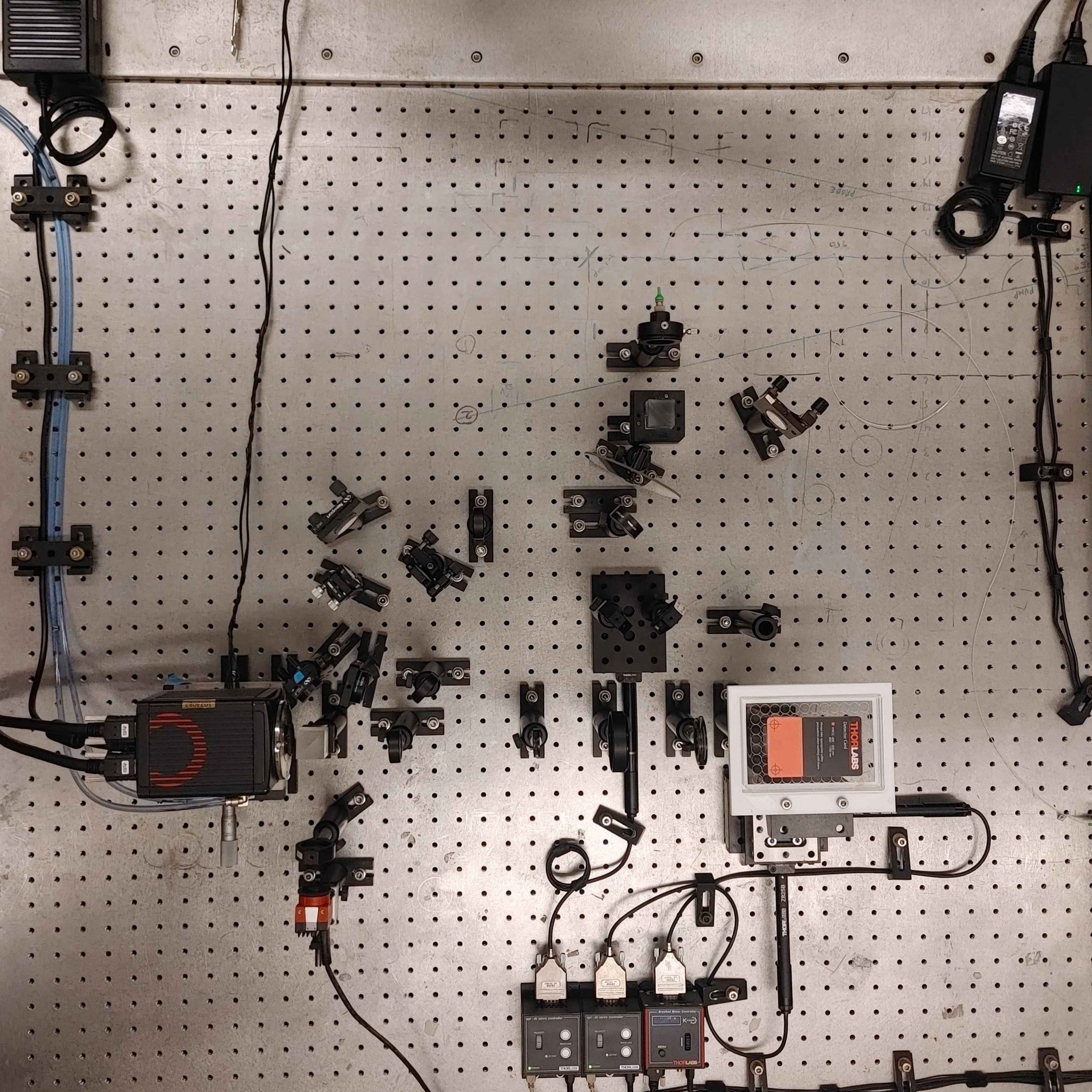
I have spent the past three years doing a lot of manual optomechanics work. While this is a pretty specific skill that may not seem generally applicable to what I now focus on (data analytics/data science), it’s something I have spent a lot of time on, and I think it demonstrates my style of work fairly well.
For context, beta system is a Mach-Zehnder interferometer that uses coherence gated off-axis holography to capture thin optical sections of targets. Our research group has already used similar system successfully for many projects that led to successful publications.
About a year ago, we procured a high-quality scientific camera from Hamamatsu, and it was determined that beta system, which, until that point, was used as a testbed, should be upgraded with the new camera and turned into a permanent, publication-grade experiment system.
However, due to the nationwide supply chain disruptions, we had difficulty procuring other components we needed to rebuild the system, and only very recently did I embark on this project fully.
Now, up to this point, I have successfully done recalibration, maintenance and partial rebuilds of other experiment systems we have, but this was the first time I was given the permission to make any changes necessary. And because the beta system was then quite a messy system of janky ad-hoc decisions patched over other janky ad-hoc decisions, I decided to take this opportunity to start from clean slate and build the system from scratch.
It was a lot of work, certainly a lot more work than it would take to just add another layer of janky patches on top of the jenga tower of patches, but in my mind it was the right thing to do.
Nearing the end of calibrating the optics, it began to bother me how messy the system was, with a spaghetti of cables running everywhere, and I put in some extra work to tidy everything up.
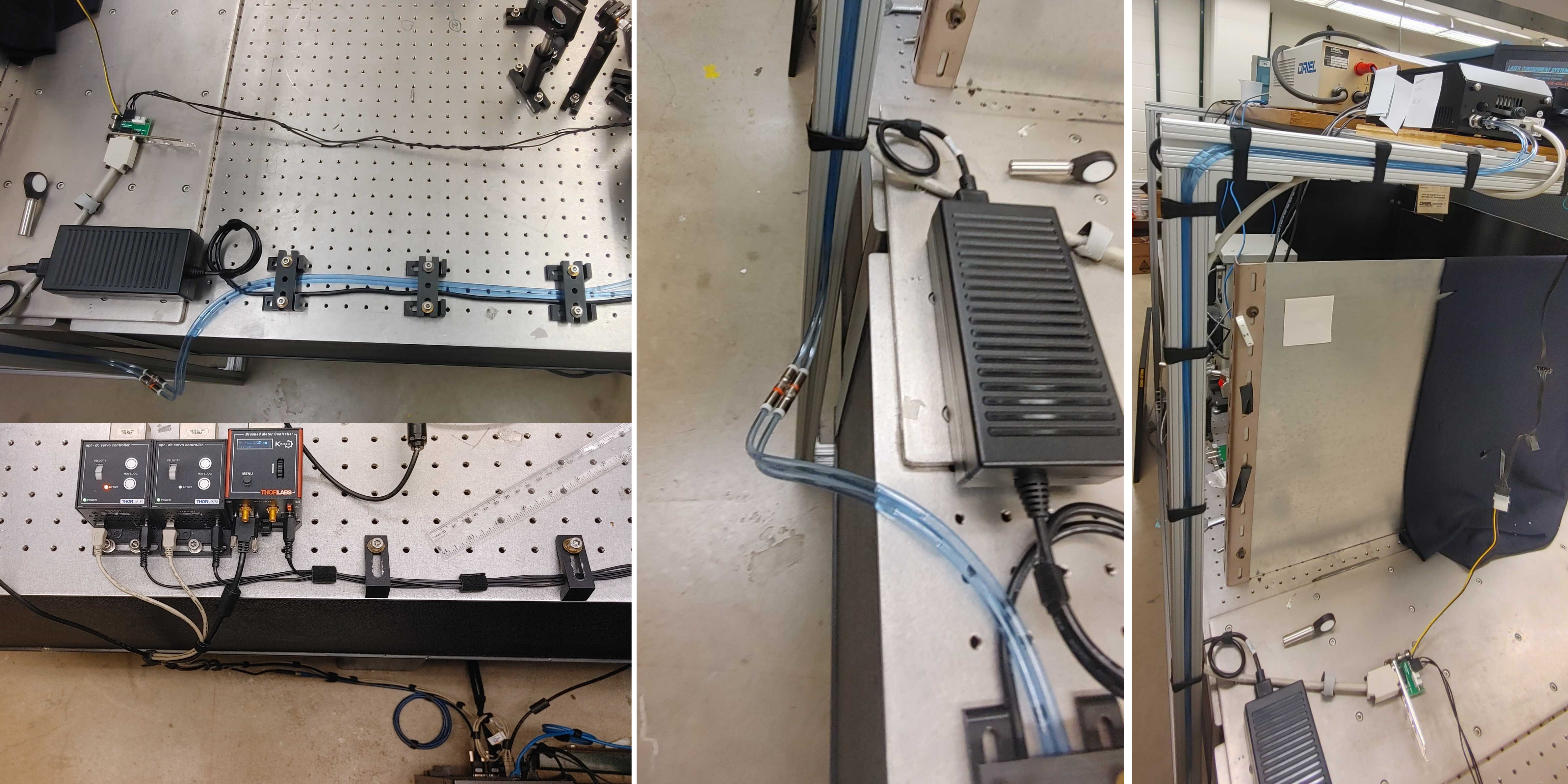
Truth be told, this post is basically an excuse to express how proud I am of the clean look I have achieved. It can obviously look much nicer, but I have done the best I could do given the time and budget I had. That is my approach to any work that I am assigned to. I don’t want to just do the bare minimum I can get away with, but I am also not a perfectionist. I want to do my best, WINTHIN the constraints set by the available time and resources at hand.
I actively dislike the notion of perfectionism because it implies a fixed idea of how things should be. Every project is a series of tradeoffs from start to finish. The scope of work, the quality of work, extensibility, speed, every choice along the way is a series of compromises. There are many dimensions with which a product can be evaluated, and the idea of `perfect’ often misses this nuance. What we should strive for instead is the best we can do given the circumstances.